
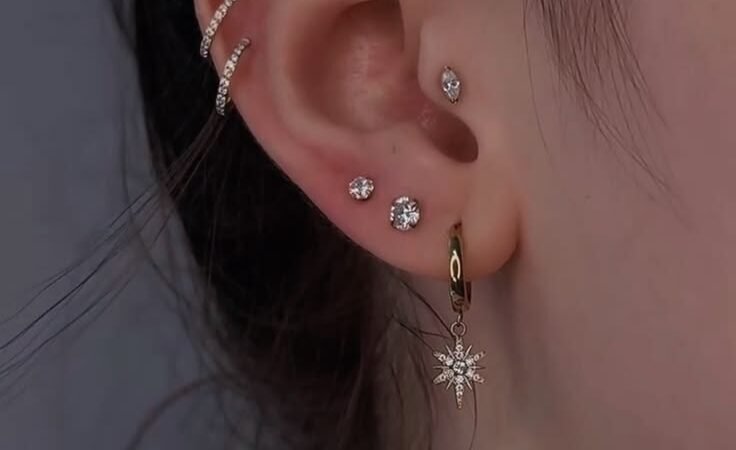
Do Cartilage Piercing Hurt | Understanding the Pain Factor
Cartilage piercings are more painful than ear lobe piercings, but less so than other body piercings. This is due to the thickness and hardness of cartilage tissue. You will therefore definitely feel some pain and suffering.
Most people agree that cartilage piercings, like the helix, hurt more than lobe piercings. The pain feels sharper at the moment of piercing, and the soreness lasts longer too, sometimes for days or even weeks.
Helix piercings have their own healing timeline. If you want a detailed breakdown, check out our guide on how long does a helix piercing take to heal
How Long Does A Cartilage Piercing Take To Heal
Cartilage piercings are usually found to take a bit longer to heal than other types of ear piercings. While ear lobe piercings can be healed in as little as 6 weeks, cartilage piercings can take 6 to 12 months to be fully recovered.
The time taken for a cartilage piercing to heal is also determined by which part of the ear is pierced. In general, cartilage piercings on the ear’s outer rim heal more quickly than those on the tragus or conch.
How Is a Cartilage Piercing Done?
Cartilage piercing can be done using one of two methods:
Needle Piercing
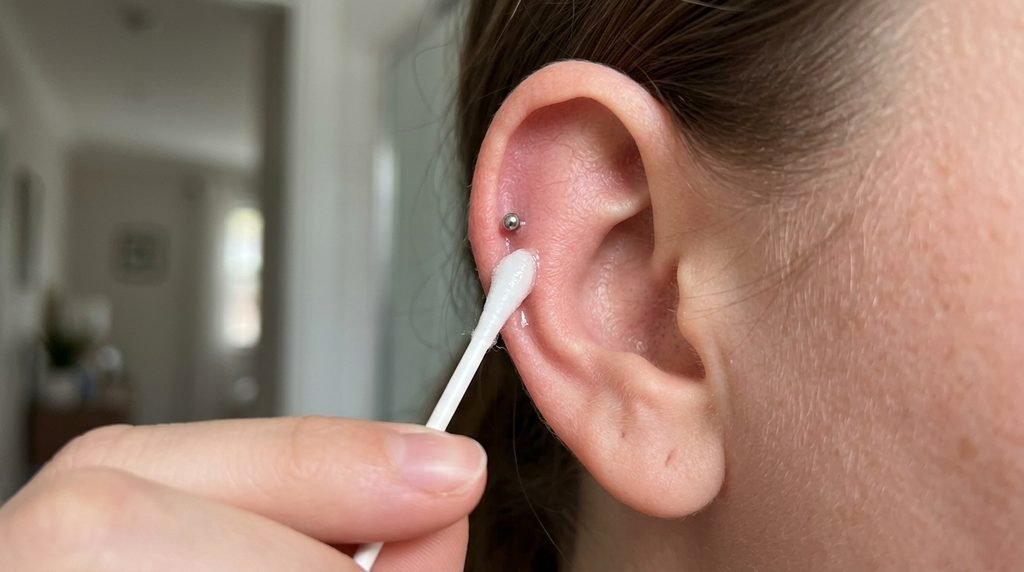
- The cartilage area is first cleaned with a cotton swab dipped in a disinfectant like betadine or iodine.
- A new, sterile needle is then used to create the piercing.
- This is the most common and recommended method for cartilage piercings.
Dermal Punching
- A small dermal punching tool is used instead of a needle.
- The tool removes a tiny piece of cartilage to create the hole, similar to how a paper puncher works.
- This method is popular for people who want a bigger hole for larger jewelry, and it’s commonly used for conch piercings.
- Since a part of the cartilage is removed, the hole is permanent and will not close up, unlike a lobe piercing.
- This method is riskier and should only be done under the supervision of a medical professional.
Which One Should You Choose?
- Needle piercing is the safer and more recommended option for most people.
- Dermal punching should only be considered for specific cases, and always with a qualified professional.
If you’re specifically considering a forward helix piercing, check out our complete guide on healing time and aftercare
Factors Influencing Pain Perception
Individual pain tolerance plays a crucial role in how one perceives discomfort during a cartilage piercing. Many ask, “Do cartilage piercings hurt?” The answer can vary significantly from person to person. Someone with a high pain threshold may find the procedure more manageable, while others may experience intense discomfort. The type of jewelry, such as captive bead rings, can also influence pain levels. For instance, the material and design of the captive bead ring might affect how the skin reacts during the piercing. Understanding these factors helps individuals prepare mentally for the experience.
Aftercare For Cartilage Piercing
Caring for your new cartilage piercing is essential to ensure a smooth healing process and minimize discomfort. A good piercer will provide specific aftercare instructions, emphasizing the importance of keeping the area clean and avoiding unnecessary irritation.
7 Ways You Can Style a Cartilage Piercing
Choosing the right jewelry is also very important. Make sure the pendant or earplugs you select are made of high-quality materials like titanium or surgical steel. These compounds lessen the risk of irritation or allergic reactions. Don’t replace jewelry too soon since your body needs time to mend
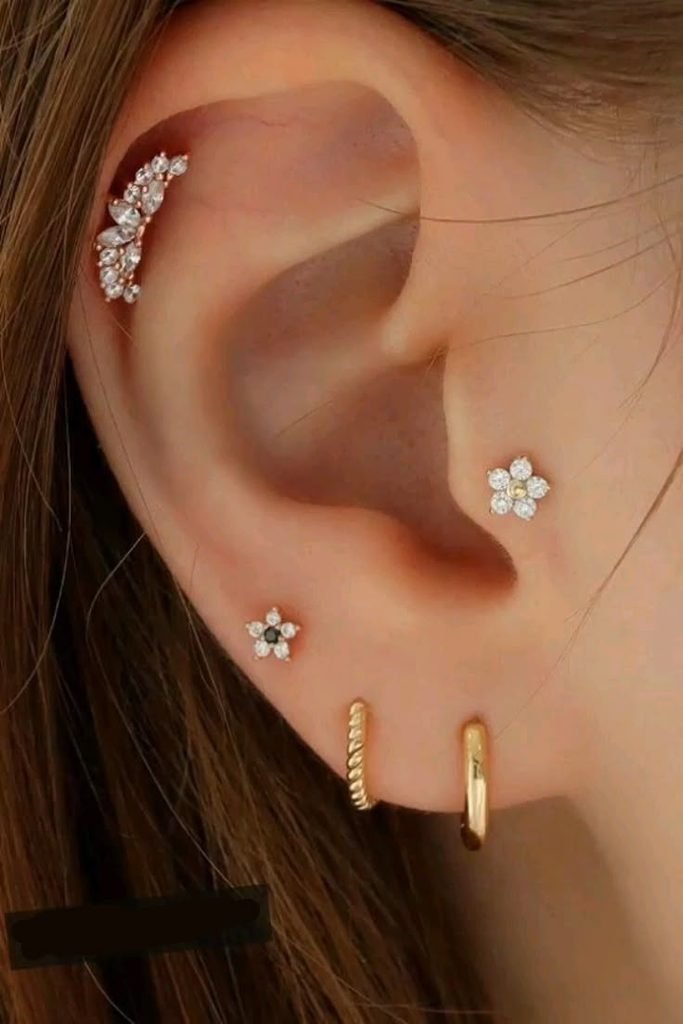
| Style | Description | Best For |
| Labret / Flat Back Stud | Flat disc at back, small gem or ball in front. Comfortable for sleeping. | New piercings / healing stage |
| Hoop | Small round piece that wraps around the cartilage. Also called a huggie. | Healed piercings |
| Clicker | Hinged hoop that snaps shut. Looks seamless, easy to wear. | Healed piercings |
| Captive Bead Ring (CBR) | Hoop with a bead held by tension. A classic style. | Healed piercings |
| Flower Cluster | One large flower with two small ones beside it. | Statement look, healed piercings |
| Large Studs (Bar Style) | Solid vertical bar that fills the inner ear. | Bold, standout look |
| Dainty Studs | Small crystal, opal, or plain ball. Trinity design with three tiny balls also popular. | Minimal, subtle look |
Conclusion
Concerns over the procedure might be reduced by being aware of the details of cartilage piercing. “Do cartilage piercings hurt?” is a question that many people have. The level of discomfort is frequently determined by the piercer’s technique and each person’s pain tolerance. Selecting a professional piercing facility that use a standard piercing stud will assist reduce discomfort and guaranty a more smooth procedure. You can appreciate your new piercing and properly manage any discomfort if you are well-informed and prepared.
FAQS
Do cartilage piercings cause pain during the healing process?
Yes, cartilage piercings can cause some pain during the healing process, as they penetrate the thicker tissue of the ear. Generally, the discomfort can vary from person to person, but it is common to experience sensations such as soreness or tenderness during healing.
How painful is a cartilage piercing compared to other types of piercings?
A cartilage piercing can typically be more painful than other types of piercings, such as earlobe piercings, because the cartilage is a tougher tissue. However, individual pain tolerance varies, and some may find the pain manageable.
What is the level of discomfort associated with getting a cartilage piercing for the first time?
The level of discomfort experienced during a cartilage piercing can vary from person to person, but many report a sharp sensation followed by some throbbing pain as the piercing heals. It’s generally comparable to minor discomfort but can feel more intense in sensitive individuals.
How does the pain of a cartilage piercing compare to traditional earlobe piercings?
The pain level of a cartilage piercing is often more intense than that of traditional earlobe piercings. While everyone experiences pain differently, many find that cartilage piercings involve a sharper sensation due to the denser tissue and location.
What should I expect in terms of pain when getting a cartilage piercing?
When getting a cartilage piercing, expect a brief moment of discomfort during the procedure. Pain levels can vary depending on individual pain tolerance, but many people describe it as a sharp pinch followed by a throbbing sensation. Afterward, sensitivity can continue as the cartilage heals, so it’s important to follow aftercare instructions to minimize any prolonged discomfort.