
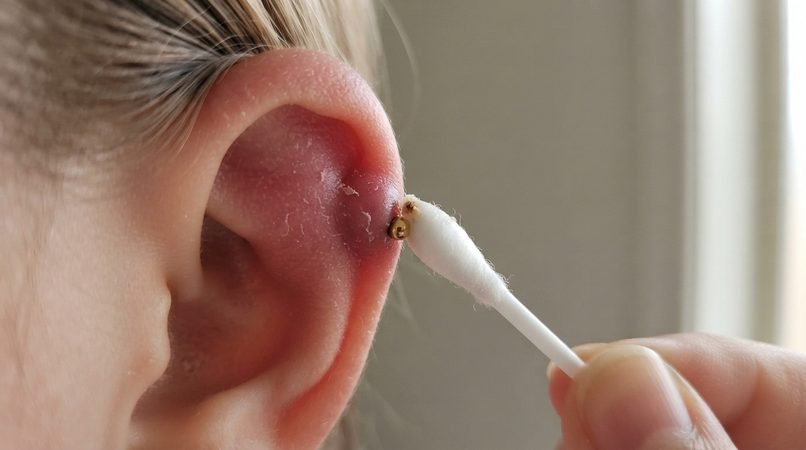
How Long Does A Helix Piercing Take To Heal
A helix piercing usually takes 6 to 12 months to heal fully. Most people feel comfortable around the 6 to 9 month mark, but it is not unusual for it to take a full year. Once healed, the piercing will feel normal, with no tenderness, swelling, or discharge.
The healing time for a helix piercing can vary depending on various aspects. Everyone experiences pain differently and their level of tolerance is different. The same goes for healing time. It mainly depends on your health and aftercare practices.If you have any complications during this time, it’s important to keep your new piercing clean and dry.
Helix Piercing Healing Time and Stages
| Healing Stage | Duration | Symptoms | Care tips |
| Initial Healing | 6 to 9 months | Slight swelling and redness | Don’t change jewelry |
| Comfort Phase | 6 month to 1 year | Increased comfort and reduced irritation | Clean gently |
| Full Healing | 1 year | Slightly irritation or no irritation | Check for any signs of infection |
From the first few days to full healing, here’s what to expect with a helix piercing. Stay on this blog till the end for tips on faster healing, aftercare, and the best jewelry styles to try.
Helix vs. Other Cartilage Piercings
A helix piercing is a type of cartilage piercing located on the outer rim of the upper ear. So when people ask, “How long does a helix piercing take to heal?” the answer is usually 6 to 12 months. Cartilage has less blood flow than soft tissue, so it heals more slowly than a lobe piercing, which may heal in just a few weeks.
Other cartilage piercings, like the forward helix, tragus, or conch, follow a similar healing timeline, though it can vary from person to person. Healing speed depends on aftercare, cleanliness, and the jewelry you choose. Cleaning with sterile saline solution and using implant-grade starter jewelry can help the process go smoothly, no matter which cartilage piercing you get.
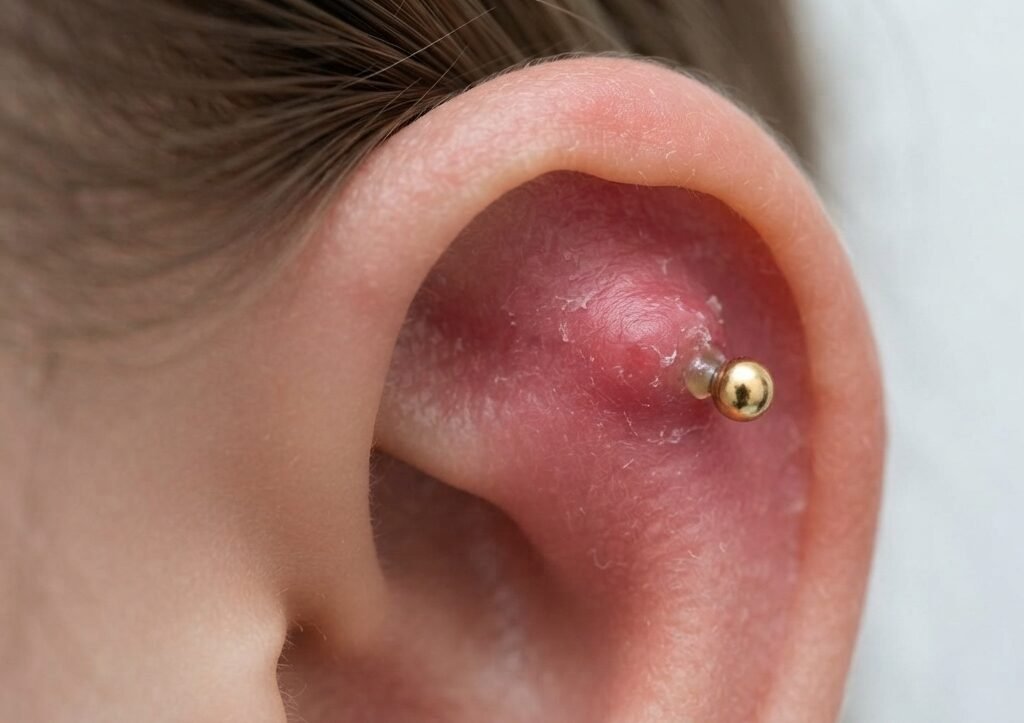
5 Common Reasons a Helix Piercing Heals Slowly
If your piercing is still red, sore, or producing discharge after a month, one of these is the likely cause.
1. Improper Jewelry Material
The most frequent cause of healing issues is improper jewelry material. That is precisely correct, and the number one reason why the piercer refuses to cooperate. For weeks, months, or even years, the jewelry material is in constant, direct touch with unhealed tissue. There is no care that can make up for this material’s indifference to your body.
2. Constant irritation
Even if you have excellent titanium jewelry and take proper care of it, mechanical irritation of the piercing canal can undo weeks of healing overnight. Tissue that is attempting to regenerate requires one thing above all: peace.
The most common kind of mechanical irritation.
- Touching the piercing with your hands
- Sleeping on the side of the piercing
- Snagging on clothes, scarves, hats
- Frequent twisting or turning of jewelry
- Contact by phone
- Pool and sea water
3. Wrong Aftercare
In contrast, too much care is just as harmful as no care at all. Many people, with good intentions, use cosmetics that dry out the skin, damage healthy cells, and disrupt the body’s natural healing process.
4. Wrong jewelry size
Beginning jewelry chosen by a skilled piercer always has a stem length that is appropriate to the thickness of the tissue being pierced and the expected swelling. This is no coincidence; it is an exact calculation. If you bought the jewelry yourself or replaced it without consulting a piercer, you run the chance of experiencing healing issues.
5. Infection & inflammation
For the first few days, a piercing that is healing well may appear slightly red and sensitive to touch; this is the body’s natural response to injury. The issue arises when these symptoms persist or get worse. Differentiating between the infection and the natural healing process is crucial.
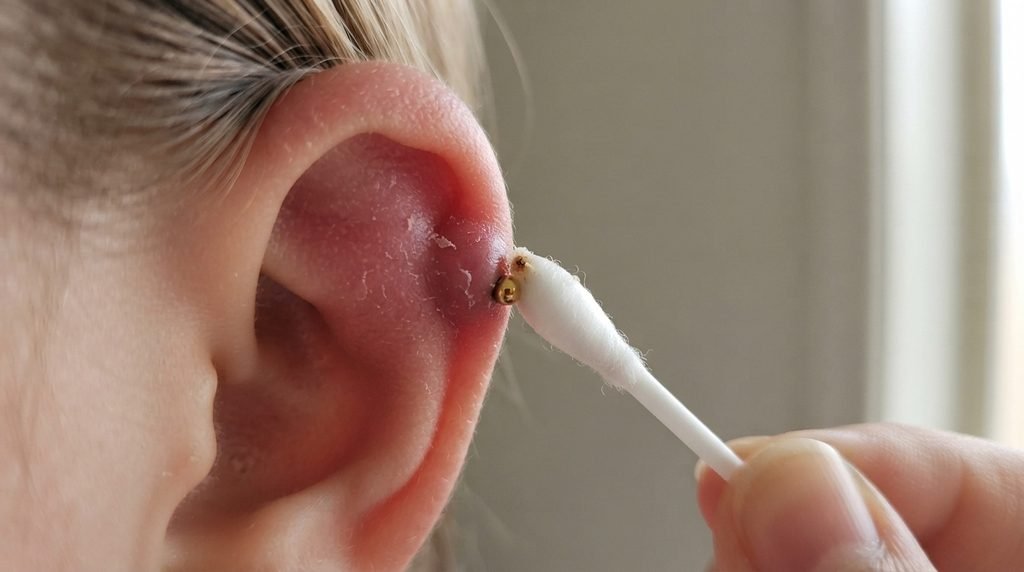
When to Seek Professional Help
Increased discomfort, redness, or swelling after the first week. discharge that is thick, black, or odorous. When jewelry becomes embedded in the skin, it causes persistent swelling. a bump
that persists after three to four weeks of appropriate treatment. jewelry that seems to be rejecting or moving. Fever or intense, streaky redness emanating from the piercing could indicate an infection; consult a physician.
Irritation, not infection, is the primary cause of piercing issues. However, it’s always preferable to have your piercer evaluate the circumstances rather than making your own assumptions.
Aftercare for Helix Piercings
After getting your piercing, cleaning is an essential part of recovering properly and quickly. It is important for proper healing. You can use a saline solution. Don’t touch your ear with dirty hands to avoid any infection. Use a clean cloth to dry the area.
Avoid going to swimming pools and hot tubs, where bacteria might thrive. A single helix piercing may require daily attention to prevent discomfort and promote optimal healing. Pay attention to any signs of inflammation and maintain a consistent care schedule to protect your investment in your style. Properly caring for the piercing will aid in a quicker recovery and prevent unnecessary delays in the healing timeline.
Helix Piercing Aftercare Tips
Good aftercare is the best way to speed up healing and avoid setbacks.
| Aftercare Practice | Description | Frequency |
| Saline Solution Cleaning | Use a saline solution to clean the piercing and promote healing | Twice daily |
| Avoid Sleeping on the Piercing | Refrain from sleeping on the side of the piercing to minimize irritation. | Throughout the healing process |
| Limit Hair Product Use | Avoid contact with hair sprays and styling products that can irritate the piercing | During initial healing phase |
| Consult a Professional | Seek advice from a professional piercer if any issues arise. | As needed |
| Monitor for Infections | Keep an eye out for signs of infection like redness or swelling | Daily |
Always wash your hands before touching the area, and don’t remove or change the jewelry until fully healed.
Best Helix Piercing Jewelry Options
For aftercare, selecting the appropriate helix jewelry is also crucial. Make sure the earplugs or pendant you choose are constructed from premium materials like surgical steel or titanium. These substances reduce the possibility of allergic responses or irritation. Your body needs time to heal, so don’t replace jewelry too quickly.
Selecting the right type of jewelry not only enhances the piercing but also makes it look more appealing. This piercing allows a variety of jewelry styles.
| Style/Design | Description | Jewelry Type |
| Stacked Helix Piercings | A layered look created by multiple piercings along the helix | Hoops, studs, and barbells |
| Diamond Ear Chain | An elegant design featuring a chain adorned with diamonds | Chains with diamond or gem accents |
| Geometric Shapes | Modern designs featuring triangles, squares, or other shapes | Geometric studs and hoops |
| Cuffs and Wraps | Jewelry that wraps around the ear for a bold statement | Ear cuffs and wraps |
Conclusion
A helix piercing typically takes 6 to 12 months to heal, and mid-helix or multiple cartilage piercings can take longer. Using quality jewelry, cleaning with saline, avoiding irritation, and checking in with a professional piercer will help you heal smoothly and avoid complications.
FAQs
How long does a helix piercing take to heal?
Usually 6 to 12 months. Many people feel comfortable by 6 to 9 months, but full healing can take a year.
Can I change my helix jewelry early?
It’s best to wait until it’s fully healed. Changing it too soon can irritate the tissue and restart healing. Ask your piercer first.
Is it normal for a helix piercing to be sore for months?
Mild tenderness can come and go, especially if you bump it. Persistent pain, swelling, or discharge is not normal; see your piercer.
Does a helix piercing heal faster than other cartilage piercings?
No. Most cartilage piercings, including tragus and conch, heal in a similar 6 to 12 month window.