
What Is a Forward Helix Piercing?
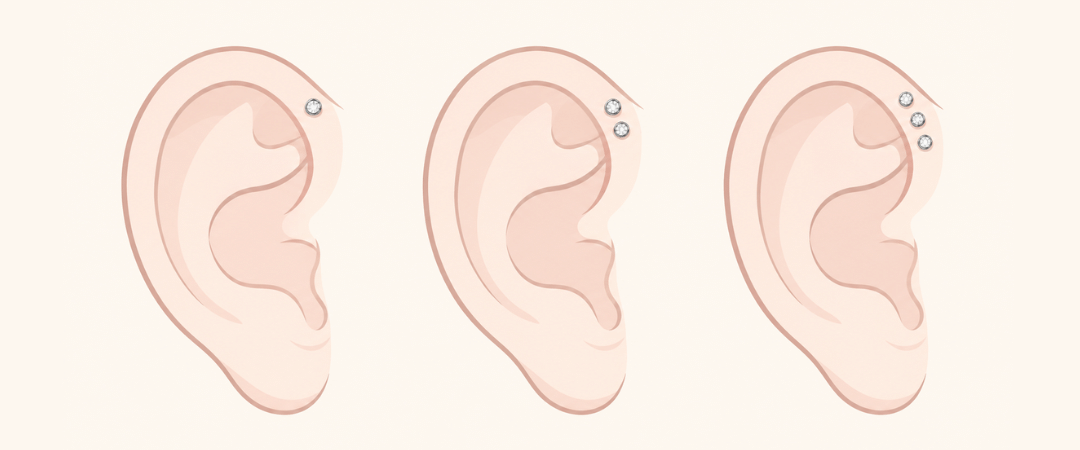
A forward helix is located in the upper part of the ear, on the outer rim. It’s different from a traditional helix piercing because it sits closer to the front of the ear, near the face.
Like a fingerprint, no two ears are the same. Everyone’s ear shape and anatomy are different, so it’s best to talk to your piercer and see what works for you. Not everyone gets a triple forward helix. Some people get a double, and some get a single. A forward helix is one of several helix piercing styles. If you’re new to the topic, start with our guide on what a helix piercing is before exploring this specific placement.
A big shout-out to Christina Shaw, the piercer behind these piercings. She took the photos and introduced the triple forward helix to the world.
Thinking about a forward helix? Before you sit in that chair, there are a few things nobody tells you. Like how long it really takes to heal, and how many ways you can style it.
Anatomy
This piercing is, of course, anatomy dependent, and not all ears will be able to support this style. There is a lot of room for piercings on some ears. Others have this ridge almost touching the flat of the ear, making it impossible to pierce them.
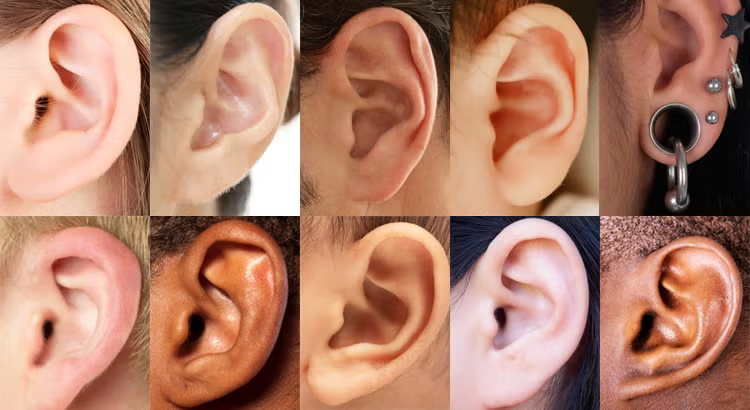
The front helix ridge of certain people is so little that there is hardly any space for a piercing. Some have big, broad ridges that could hold the biggest, most ornamental jewels. Some people have thinner rook ridges or a large gap between the front helix and rook, yet this has no effect on their piercings. Our placement for forward helix piercings is restricted because other people’s rooks contact the back of their helix.
Placement
With a forward helix, location is now highly dependent on anatomy. As we covered with anatomy, your ear’s shape greatly influences the number of forward helix piercings, if any, that it can accommodate. However, it also dictates the location of ear piercings.
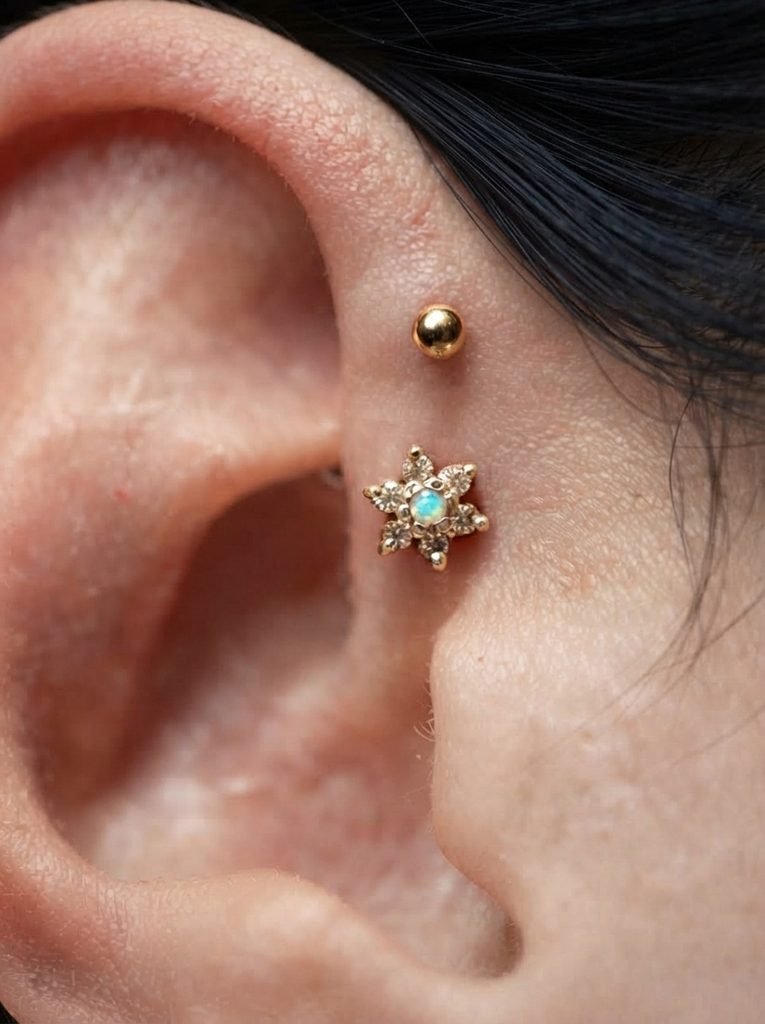
Consider this ear, for instance. This placement is nestled near the Rook Ridge. There would not have been much room for the piercing’s back to rest if it had been positioned higher or lower and immediately over the ridge, which could result in irritation bumps and other problems. For things to be feasible, we had to go above or below the location of that ridge.
Some people may have enough room for their forward helix to be pierced, giving them the luxury of selecting a site only for aesthetic purposes. And when this is the case, it’s fantastic! However, if you intend to get a forward helix piercing, be aware that your anatomy may have a significant influence on placement, and arrive at your appointment with reasonable expectations.
How Is a Forward Helix Piercing Done?
Getting a Forward Helix Piercing involves a series of careful steps that ensure both safety and comfort. The standard size for forward helix piercings is 16-gauge, though 18-gauge may be used in some cases. Your piercer will use implant-grade titanium or gold and fit you with a labret stud that is slightly longer than what you’ll eventually need after you heal, to accommodate for swelling.
Your piercer can check your ear to see if you can get a forward helix piercing. If not, they will suggest another style according to your ear anatomy.
| Step | What happens |
| Consultation | Ask the piercer about piercing options, jewelry styles and aftercare. |
| Preparation | The piercer cleans the area and prepares the right tool that must be sterilized. |
| Piercing | The main step, where the hole is created and jewelry is inserted by the piercer. |
| Aftercare Consultation | Guidance is provided by the piercer on how to care for the new piercing. |
How bad does a Forward Helix Piercing hurt?
When it comes to pain, everyone’s tolerance is different, though cartilage tends to be on the higher end of the scale for most. The piercing process may take a little longer as well, since this is a very tight area of the ear. Your piercer will have to be extra precise. Like any cartilage piercing, the forward helix will take a little longer to heal, as cartilage is slower to heal than soft tissue.
How long does a Forward helix piercing take to heal?
A forward helix can take anywhere between 6 and 9 months to heal, though that could be longer depending on your body. If you have any complications during this time, it’s important to keep your new piercing clean and dry.
| Healing Stage | Duration | Symptoms | Care tips |
| Initial Healing | 6 to 9 months | Slight swelling and redness | Don’t change jewelry |
| Comfort Phase | 6 month to 1 year | Increased comfort and reduced irritation | Clean gently |
| Full Healing | 1 year | Slightly irritation or no irritation | Check for any signs of infection |
Aftercare for Forward Helix Piercings
Compared to other piercings, forward helix piercings are more challenging to cure, especially the more you acquire.
First, you must use a saline solution spray to clean it at least twice a day. However, it might be tricky to keep the forward helix piercing as clean as possible because it may be in a small space where it is impossible to reach the backside. Use pointed makeup Q-tips to wipe the back side of the piercing and remove any crusties or discharge.
Jewelry Options for Forward Helix Piercing
Selecting the appropriate jewelry is also crucial. Make sure the earplugs or pendant you choose are constructed from premium materials like surgical steel or titanium. These substances reduce the possibility of allergic responses or irritation. Your body needs time to heal, so don’t replace jewelry too quickly.
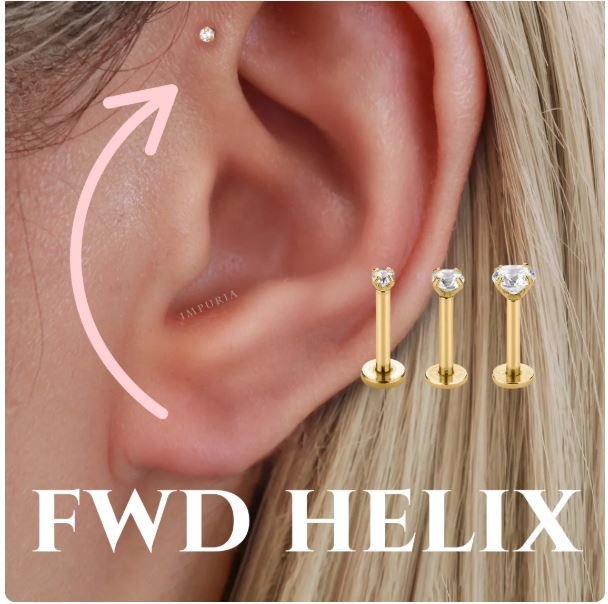
Selecting the right type of jewelry not only enhances the piercing but also makes it look more appealing. This piercing allows a variety of jewelry styles.
4 Ways you can style a Forward Helix Piercing
Forward helix piercing jewelry comes in many different styles, so you can choose one based on your preferred look and ear anatomy. Here are some popular options:
- A labret/flat back stud: This is the most common jewelry style for a forward helix. It has a flat disc on one end that sits against the back of the ear, and a small gem or ball on the front. The flat back makes it more comfortable than a regular stud, especially while sleeping.
- A hoop: Once your forward helix piercing is healed, it is common to swap out your stud for a new piece of jewelry. Once the healing process is completed, you may opt for a hoop. These small, round metal pieces wrap around the cartilage and can droop on the ear. They can also be referred to as huggies.
- A clicker: A clicker is a type of hoop with a hinge that snaps shut, making it easy to put in and take out. It gives the look of a seamless ring without the hassle of screwing in a ball.
- A captive bead ring (CBR): This is a hoop with a small bead held in place by tension. It’s an older style, but some people still like the classic look it gives.
The right forward helix piercing jewelry depends on your ear anatomy, piercing placement, and personal style.
Conclusion
The Forward Helix Piercing has gained popularity due to its unique placement and aesthetic appeal. Ascending from the traditional ear lobe piercings, this style adds an edgy yet sophisticated look that many seek. Understanding the nuances of Forward Helix Piercing care, healing, and jewelry options can enhance the overall experience and ensure that the piercing remains healthy and stylish. Embracing this trend allows for personal expression while navigating the various aspects of maintenance and aftercare that accompany it.
FAQs
How is a single forward helix different from a daith or tongue piercing?
A single forward helix gives a subtle, stylish look and usually heals within 6 to 9 months. A daith or tongue piercing goes through different tissue, so healing time and care can vary. Whichever you choose, always go to an experienced piercer and ask for implant-grade jewelry.
How does forward helix healing compare to a daith or tongue piercing?
A forward helix usually takes 6 to 12 months to heal, since it goes through cartilage. A daith is also cartilage and takes a similar amount of time, while a tongue piercing (soft tissue) usually heals faster, often within a few weeks to a couple of months. No matter which one you get, follow your piercer’s aftercare instructions closely.
What jewelry tips help with healing a forward helix?
Stick with implant-grade titanium or gold, since cheap metals can irritate the skin. A flat back stud is best for the first few months. Avoid changing the jewelry early, and don’t get more piercings on the same ear until this one has fully healed.
What should you consider before getting a forward helix compared to a tragus piercing?
Both need a skilled piercer, since the anatomy is different for everyone. A forward helix sits at the front of the upper ear, while a tragus is the small flap near the ear canal. Talk to your piercer about which one suits your ear shape, and always ask about proper aftercare