
What Gauge is a Helix Piercing and Everything You Need to Know
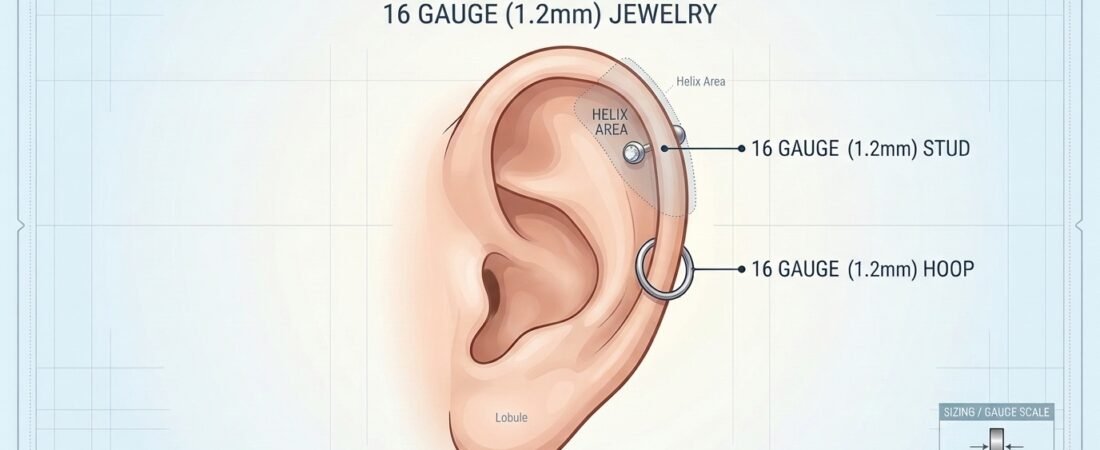
The most common size for a helix piercing is 16 gauge, which is 1.2 mm thick. Most professional piercers use this size, and it works well for both new and healed piercings. Some studios use 14 gauge, which is 1.6 mm, because the thicker bar gives more support.
For the first bar, the usual length is 8 to 10 mm. After the swelling goes down, the piercer can switch it to a shorter bar of about 6 mm. If you want a hoop, the usual size is 8 to 10 mm across, depending on where the piercing is placed.
Using a piercing gun for helix piercings is often discouraged because of the risk of complications, which is why professional piercing techniques matter. Understanding the details of helix piercings, including gauge selection and healing times, can improve the experience for anyone who wants to adorn their ears
Determining the Gauge
Gauge means how thick a piece of jewelry is. Before you buy earrings for your helix piercing, you should know the right gauge. Most helix piercings use studs, barbells, or labrets. If the gauge is wrong, the jewelry can feel tight or uncomfortable, and it can slow down healing. A good fit also helps the jewelry look neat, so gauge matters for both comfort and style.
What Gauge is a Helix Piercing?
The standard gauge for a helix piercing is 16 gauge, which is 1.2 mm thick. Most professional piercers use this size because it is strong enough to hold the jewelry well and comfortable enough to wear every day. This is true for a double helix, a triple helix, and a forward helix too. Knowing the gauge before you shop makes it easier to find jewelry that fits.
A forward helix sits in a small, tight area near the face. Because of this, many piercers choose a small flat back stud for it. Your piercer will pick the best size after checking your ear.
Differences in Gauges for Helix Piercings
A standard helix is usually pierced with a 16 gauge needle. Other piercings, like an industrial, may need a different size, so it is always best to ask your piercer. A higher gauge number means thinner jewelry, and a lower number means thicker jewelry.
- The standard gauge for a helix piercing is 16 gauge (1.2 mm).
- Most professional piercers use a 16 gauge needle for helix piercings.
- The gauge affects which jewelry you can wear, from small studs to hoops.
- Always buy jewelry in the same gauge as your piercing.
- Ask a professional piercer to check the fit for your ear.
- Healing depends mainly on aftercare, so keep your piercing clean.
Forward Helix Piercing Gauge and Jewelry Size
A forward helix piercing is a stylish piercing that sits on the small, curved part of the ear near your face. Gauge means how thick the jewelry is. A standard helix usually uses 16 gauge (1.2 mm), which is a common size for the helix look. For a snug piercing, a 20 gauge needle may be used, which is slightly thinner. For a forward helix, many people choose an 18 gauge earring because it feels comfortable and looks neat. Choosing the right jewelry is important, so it helps to know the gauge before you shop and plan your aftercare.
What Gauge is a Forward Helix Piercing?
A forward helix piercing usually uses an 18 gauge needle. This is a common size for many helix piercings. It helps a fresh piercing heal properly and holds the jewelry in place. An 18 gauge stud gives enough support without being too thick, so it stays comfortable while the piercing heals.
If you have more than one piercing, using the same gauge makes aftercare easier. A new piercing can be sensitive, so 18 gauge studs are a good choice because they are light and gentle. Your piercer will pick the best size after checking your ear.
| Piercing Type | Recommended Gauge | Jewelry Options |
| Forward Helix | 18 Gauge | Studs, hoops |
| Upper Helix | 16 Gauge | Studs, barbells |
| Mid Helix | 18 Gauge | Rings, studs |
| Tragus | 16 Gauge | Studs, captive bead rings |
How to Choose the Right Helix Piercing Jewelry
Choosing the right jewelry is very important for a helix piercing, for both style and healing. The gauge should match your piercing, which is usually 16 gauge, so the jewelry fits well and feels comfortable. There are many styles to pick from, like a standard helix, a vertical helix, and a forward helix, and each one suits a different ear shape. A helix piercing also takes longer to heal than a lobe piercing, so it is best to start with safe materials that cause less irritation. A professional piercer can help you choose the right style and size for your ear.
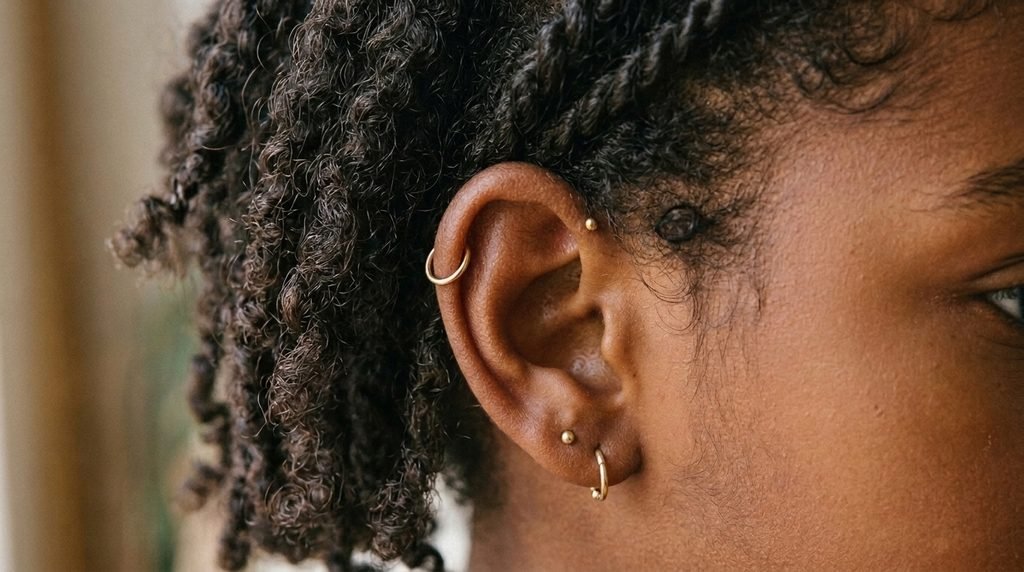
- Pick jewelry made from implant-grade titanium or solid gold, because these materials are less likely to irritate your ear.
- Choose a style that fits your face and your own taste.
- Make sure the gauge matches your piercing (usually 16 gauge).
- Start with a slightly longer bar, so there is space for swelling during healing.
- Avoid very fancy or heavy designs while the piercing is new.
- Ask a professional piercer for advice that fits your ear.
- Follow your aftercare steps to help your piercing heal and prevent infection.
Aftercare and Healing Tips
Good aftercare is very important after you get a helix piercing. It helps your ear heal well and lowers the chance of problems. The common gauge for a helix is 16 gauge, and the same size is used for many cartilage piercings, including the low helix and vertical helix. It is also smart to choose your jewelry carefully. Small studs made from hypoallergenic materials can cause less irritation while your ear heals.
While your piercing heals, keep the area clean. Clean it with a sterile saline solution, as your piercer suggests. Always wash your hands before you touch the piercing, because dirty hands can bring bacteria to the area. Be careful with hair products, and keep them away from the piercing. Also be careful with hair, hats, and clothes that can catch on your jewelry. If you follow these steps, your helix piercing will heal more smoothly.
Conclusion
The gauge is one of the most important things to know before you get a helix piercing. The standard size is 16 gauge, which is 1.2 mm thick, and it works for most helix piercings. This size affects which jewelry you can wear, like studs, hoops, and barbells. The needle should match the gauge of your jewelry, so your piercing has enough space to heal well. Beads and other small details can make your jewelry look nicer, but comfort and healing should always come first. With the right gauge and good aftercare, getting a helix piercing can be a smooth and enjoyable experience.