
What Is a Helix Piercing? Everything You Need to Know
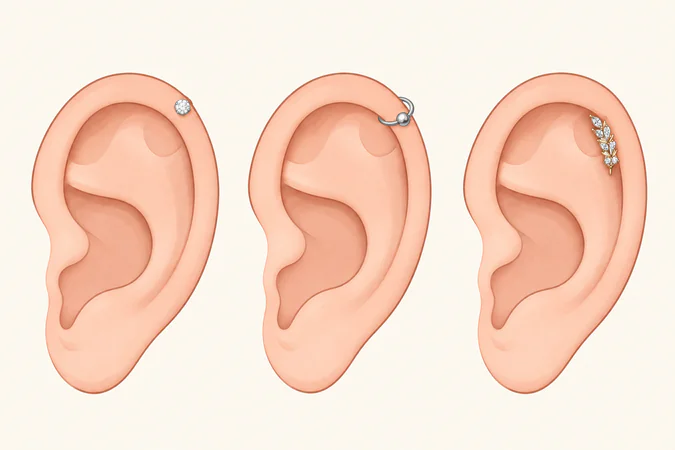
A helix piercing is a piercing placed along the outer or inner cartilage rim of the ear’s helix.
The range of placement options is what makes the helix such a great piercing choice. It’s not only versatile, but also highly customizable. The most popular placement is the upper third of the ear, typically in the fold of the helix. This area can support studs, dangles, and even hoops. It’s important to note that, unlike lobe piercings, helix piercings go through cartilage.
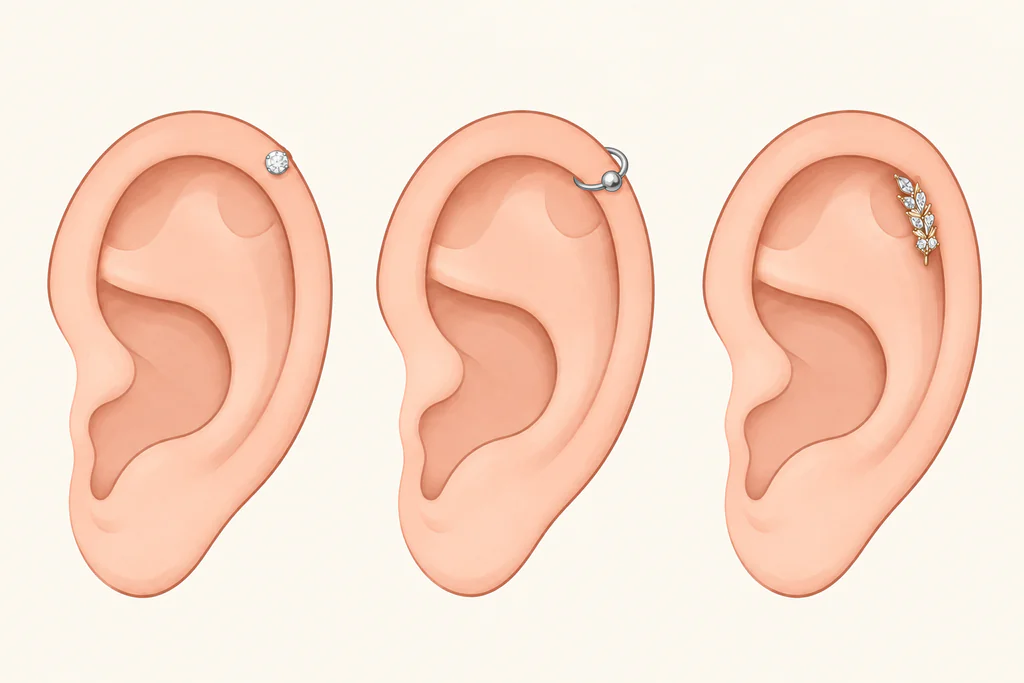
Not all cartilage piercings are helix piercings, but all helix piercings are cartilage piercings. This piercing allows a variety of jewelry styles, which offer an appealing look. There are a couple of options for helix piercings that you can get according to your own anatomy
Ever wondered why your helix piercing takes longer to heal than your lobe? The answer lies in what it’s actually piercing through. Keep reading to find out.
Types of Helix Piercing
A Helix Piercing can be done in multiple ways, You can get one or more piercings at a time. Double and triple helix piercings can be done, and even more, depending on how much space you have. You can use a variety of jewelry to make it more aesthetically appealing and versatile. There are 6 types of helix piercing
1. Forward Helix
- This piercing is placed on the front forward outer cartilage area, right next to the face.
- This piercing is really delicate ,It creates balance in ear curation.
- This piercing can support studs, dangles, hoops and clickers.
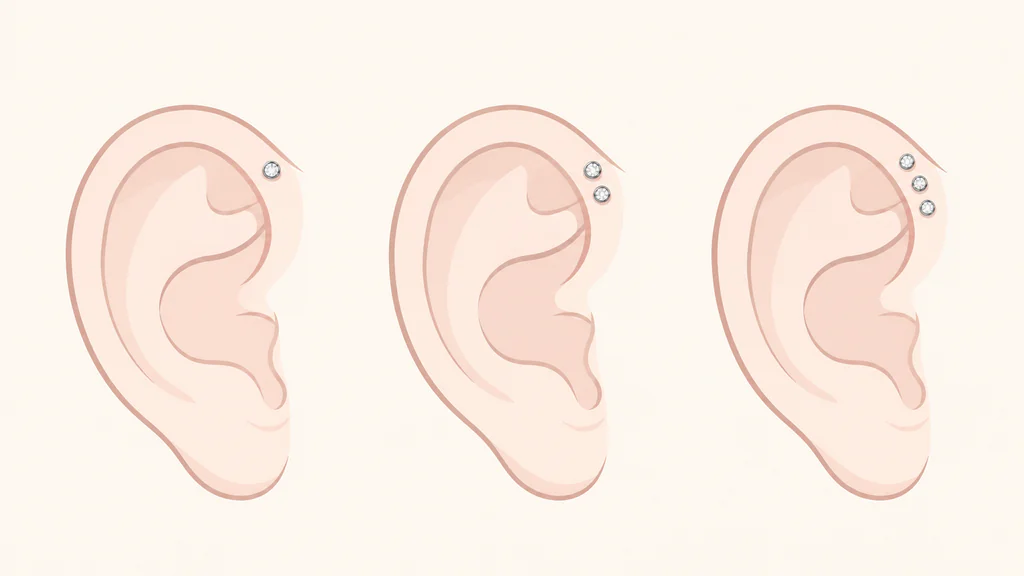
Read our full guide on forward helix piercings for placement, pain and jewelry details.
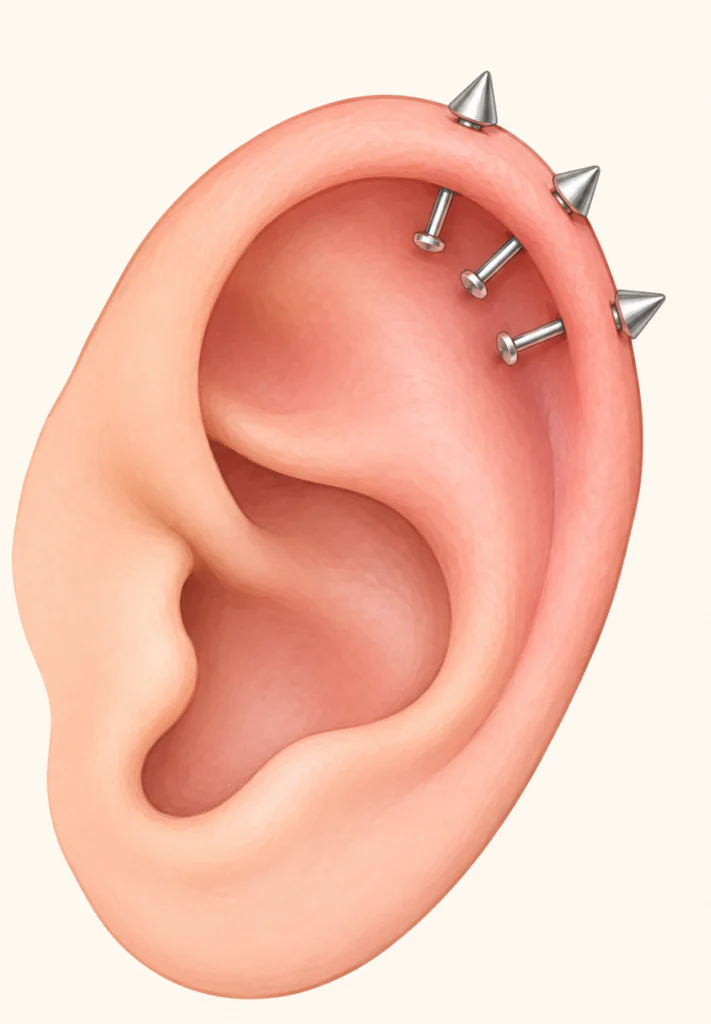
2.Vertical Helix Piercing
- This piercing is done vertically up and down through the outer ridge of the cartilage.
- You can style a different look with a vertical helix, from a bold look with spikes popping out to a more subtle one.
- This piercing can support studs, dangles and hidden-style jewelry.
3.Single Helix
- It is referred to as a standard piercing.
- This piercing is located on the upper outer cartilage.
- This piercing is a great starting option for the first time cartilage piercing.
- This piercing can support studs, small hoops and clickers.
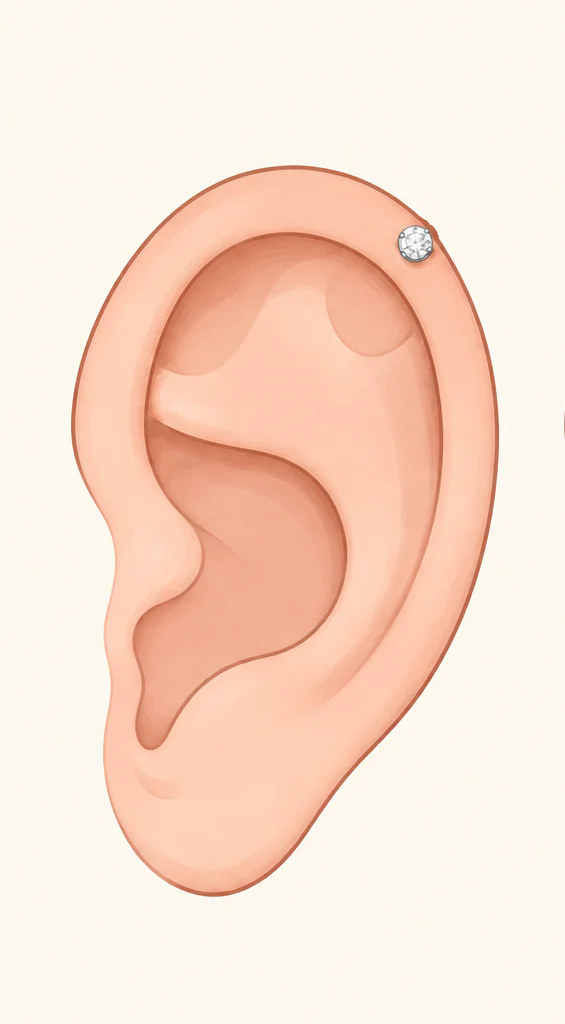
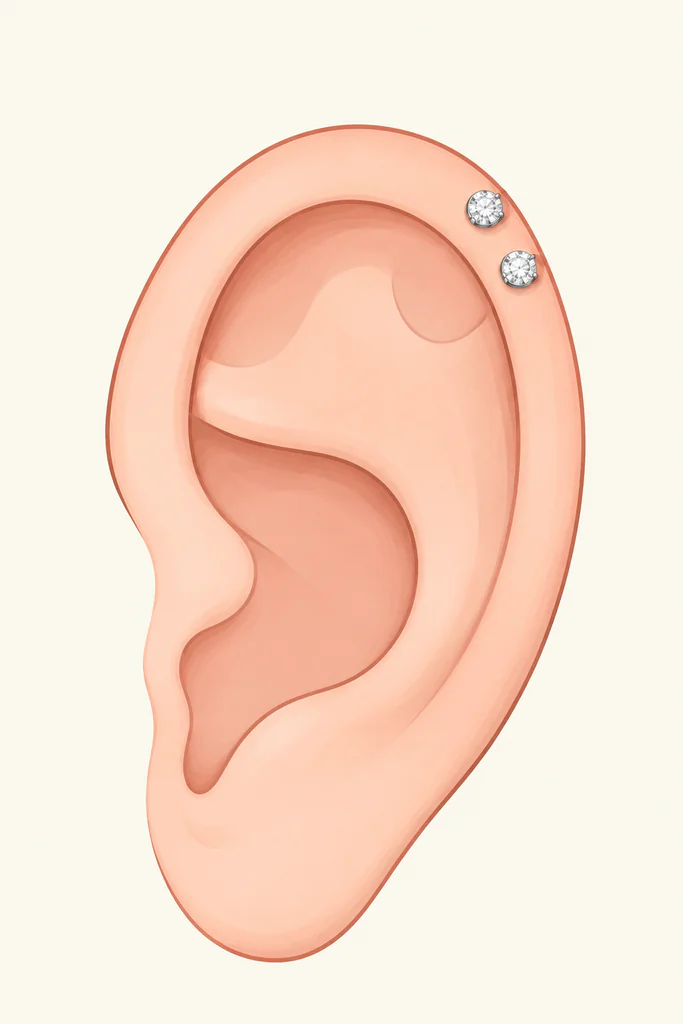
4.Double Helix
- This piercing is also located on the upper outer cartilage.
- It involves two piercing places close together.
- This piercing can support a mix of studs, small hoops, and huggies.
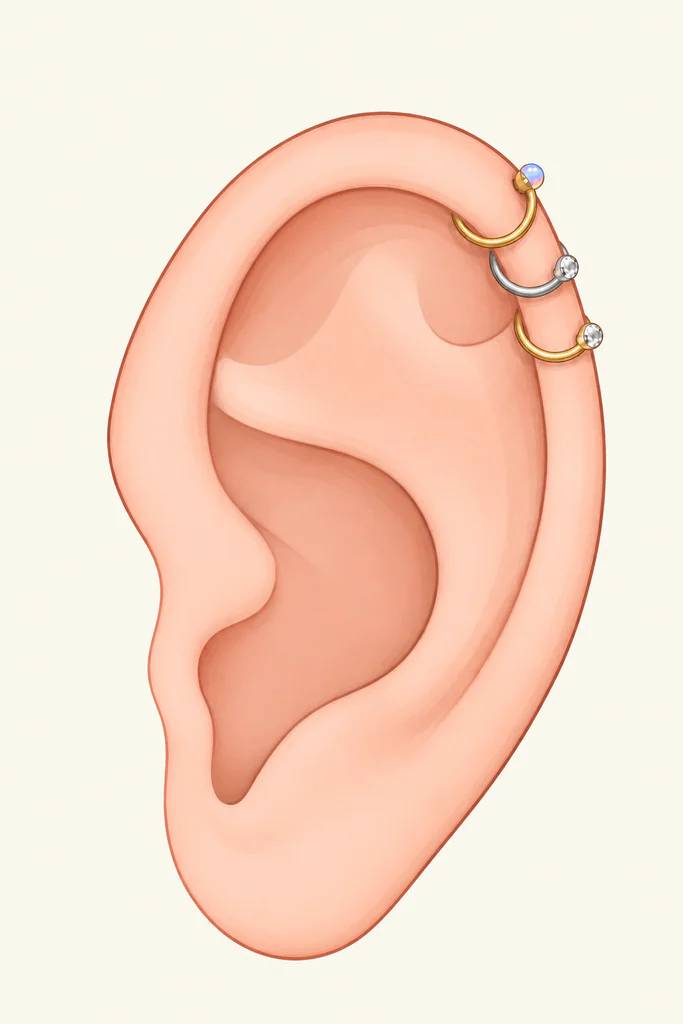
5.Triple Helix
- This piercing involves three piercings stacked along the helix, usually spaced evenly.
- This piercing can support a mix of studs, hoops, and delicate chains between piercings.
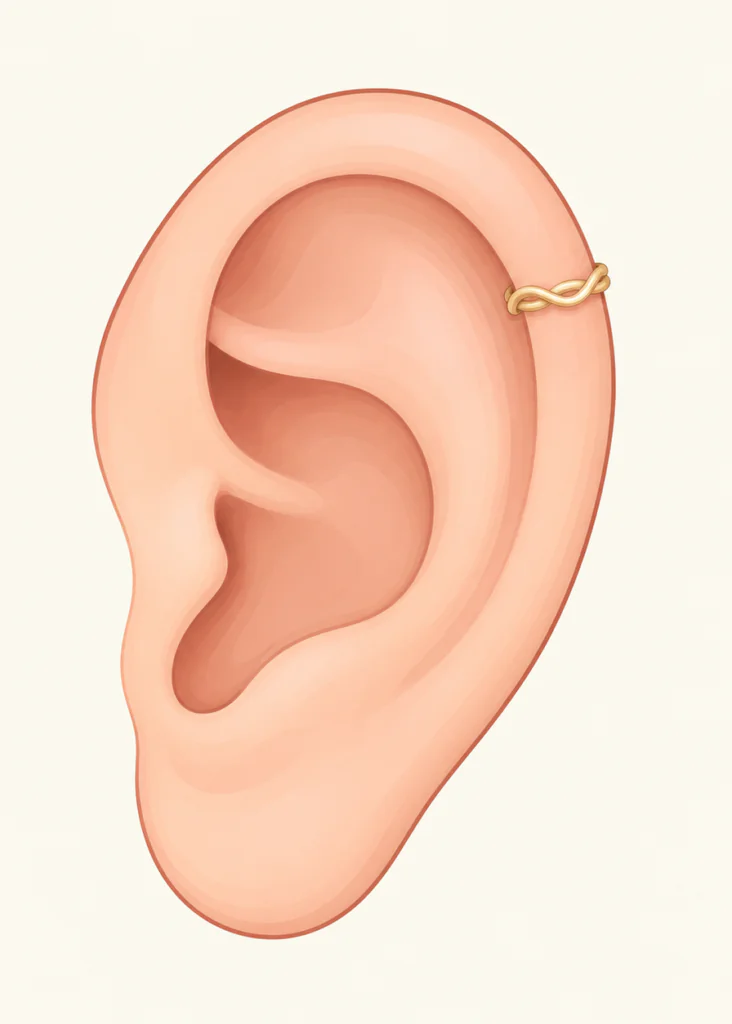
6.Snug Helix
- This piercing is located lower on the ear, through the inner cartilage ridge.
- Due to the thicker cartilage, it is recognized as one of the most painful helix-area piercings.
- This piercing typically supports curved barbells.
How Is a Helix Piercing Done?
It is very essential to understand the process of getting a helix piercing, as it involves modifying a part of the body. If your piercer uses a piercing gun, don’t go to that piercer. If you visit a professional piercer instead, the first thing they will do is evaluate your anatomy.

There are some anatomies that can’t support every variation of the helix piercing, there is so much space along the helix and the outer ridge of the cartilage that even if your anatomy doesn’t support one variation, your piercer will be able to work out a way to get you that helix piercing
A professional piercer will first examine your ear anatomy to determine the best placement for you. Like most cartilage piercings, a helix piercing is typically done with a 16-gauge needle or cannula needle, depending on the jewelry being used. Knowing what a helix piercing is and comparing it with other types of piercings can help you feel more confident and make the right decision for yourself.
| Step | What happens |
| Consultation | Ask the piercer about piercing options, jewelry styles and aftercare. |
| Preparation | The piercer cleans the area and prepares the right tool that must be sterilized. |
| Piercing | The main step, where the hole is created and jewelry is inserted by the piercer. |
| Aftercare Consultation | Guidance is provided by the piercer on how to care for the new piercing. |
How bad does a helix piercing hurt?
The piercer creates the piercing through the cartilage and inserts the jewelry.This process is really a quick pinch, that is usually less painful than expected, but everyone experiences pain differently and their level of tolerance is quite different from one person to another.
Most people rate the pain between 3 to 6 out of 10,. Cartilage piercings tend to feel a little sharper, and even crunchier, due to the cartilage. If this is your first piercing, keep in mind that cartilage piercings, including helix piercings, are notoriously slow to heal.
How to Sleep With a Helix Piercing
The majority of infections and irritations happen while you sleep. Unconscious nighttime movements might knock your piercing, producing swelling or discomfort, even if you believe you are avoiding pressure on it.
In example, rings require a lot of upkeep and have the potential to rotate upward, extending the piercing or creating tiny wounds. While rings should only be worn on special occasions, flat back studs are advised for daily use. A piercing pillow, which is specifically made to give you the ear space you need for pain-free sleep and easy healing, can help you regulate your sleep.
Helix Piercing Healing Timeline
The healing time for a helix piercing can vary depending on various aspects. Everyone experiences pain differently and their level of tolerance is different. The same goes for healing time. It mainly depends on your health and aftercare practices.
For helix piercing, it can take between 6 to 9 months on average. It’s not uncommon for it to take a whole year. When it is healed, you’ll know because it will start feeling more comfortable and normal.
| Healing Stage | Duration | Symptoms | Care tips |
| Initial Healing | 6 to 9 months | Slight swelling and redness | Don’t change jewelry |
| Comfort Phase | 6 month to 1 year | Increased comfort and reduced irritation | Clean gently |
| Full Healing | 1 year | Slightly irritation or no irritation | Check for any signs of infection |
How to Clean a Helix Piercing?
After getting your piercing, cleaning is an essential part of recovering properly and quickly. It is important for proper healing. You can use a saline solution. Don’t touch your ear with dirty hands to avoid any infection. Use a clean cloth to dry the area. Avoid going to swimming pools and hot tubs, where bacteria might thrive. A single helix piercing may require daily attention to prevent discomfort and promote optimal healing. Pay attention to any signs of inflammation and maintain a consistent care schedule to protect your investment in your style.
Helix Piercing Jewelry Options
For aftercare, selecting the appropriate jewelry is also crucial. Make sure the earplugs or pendant you choose are constructed from premium materials like surgical steel or titanium. These substances reduce the possibility of allergic responses or irritation. Your body needs time to heal, so don’t replace jewelry too quickly.
Selecting the right type of jewelry not only enhances the piercing but also makes it look more appealing. This piercing allows a variety of jewelry styles.
| Style/Design | Description | Jewelry Type |
| Stacked Helix Piercings | A layered look created by multiple piercings along the helix | Hoops, studs, and barbells |
| Diamond Ear Chain | An elegant design featuring a chain adorned with diamonds | Chains with diamond or gem accents |
| Geometric Shapes | Modern designs featuring triangles, squares, or other shapes | Geometric studs and hoops |
| Cuffs and Wraps | Jewelry that wraps around the ear for a bold statement | Ear cuffs and wraps |
The right helix piercing jewelry depends on your ear anatomy, piercing placement, and personal style.
Conclusion
Anyone thinking about getting body piercings, especially ear piercings, needs to know what a helix piercing is. This distinctive look, which offers both visual appeal and individual expression, involves piercing the helix area. Helix piercings are popular because of their versatility and the range of jewelry options that are available. Helix piercings offer a unique option that can represent a person’s personality and cultural significance, even though some people would consider traditional nose piercings. As you explore the aesthetics and care associated with a Helix piercing, it’s essential to consider factors like pain levels, healing time, and the right jewelry materials to ensure a successful experience. A more pleasurable and satisfying piercing experience is ensured by being aware of what a helix piercing is.
Disclaimer
This article is for general information only. For personal advice or signs of infection, please see a professional piercer or doctor.