
When Can I Change My Helix Piercing? A Safe Timeline Guide
Helix piercing jewelry can be changed after 6 to 12 months, when it is completely free of pain, redness, swelling, and discharge. The only exception is downsizing, in which a skilled piercer can replace a long starting post with a shorter one between 4 and 12 weeks.
Many people are surprised by that timeline. After a few weeks, a helix piercing usually appears to be healed. However, cartilage heals slowly, and changing jewelry too soon is one of the most frequent causes of irritation bumps, infections, and restarting the healing process.
This guide will teach you how long a helix piercing actually takes to heal, when to downsize, how to adjust it step-by-step, and when it’s ready for new jewelry.
Understanding Helix Piercing Healing
A helix piercing is a piercing on the outer or inner cartilage rim of the ear’s helix. Not all cartilage piercings are helix piercings, but all helix piercings are cartilage piercings.
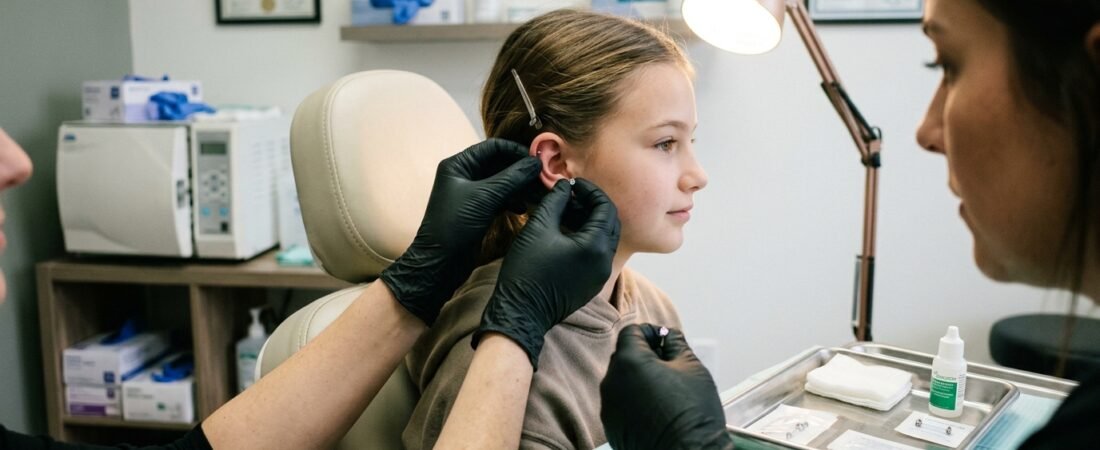
The piercer makes the piercing through the cartilage and inserts the jewelry. Although everyone experiences pain differently and has varying levels of tolerance, this procedure is actually a fast pinch that is typically less painful than expected.
The majority of people give the pain a score of 3 to 6 out of 10, Because of the cartilage, cartilage piercings often feel slightly sharper and even crunchier. Remember that cartilage piercings, including helix piercings, are notoriously slow to heal if this is your first piercing.
| Healing Stage | Duration | Symptoms | Care tips | Can You Change Jewelry? |
| Initial Healing | 0 to 3 months | Swelling, redness, tenderness, light crusting | Clean gently with saline, don’t change jewelry | No, only your piercer can downsize at 4-12 weeks |
| Comfort Phase | 3 to 6 months | Less swelling, increased comfort and reduced irritation | Clean gently, avoid sleeping on the piercing, keep a flat-back stud in | Not recommended |
| Full Healing | 6 to 12 months | Slight irritation or no irritation, feels normal | Check for any signs of infection | Yes, once pain-free |
How Long Does A Helix Piercing Take To Heal
A helix piercing often takes 6 to 12 months to heal completely. It usually takes 6 to 9 months for most people to feel comfortable, but it might take up to a year. The piercing will feel normal after healing, with no discharge, swelling, or soreness.
A piercing done with a sterile needle and quality implant-grade jewelry generally heals more smoothly than one done with a piercing gun. If you are still deciding on placement or worried about discomfort, our guide on Does Helix Piercing Hurt? explains what to expect.
Why Timing is Important When Changing Helix Jewelry
Each time you remove or adjust your jewelry, you risk disturbing the healing channel. Changing it too quickly may result in:
- Tearing of newly formed, fragile tissue
- Increased pain, redness, and swelling
- Bumps of irritation close to the piercing
- An increased chance of infection
- An extended period of recovery
Downsizing a Helix Piercing: The Initial Jewelry Modification
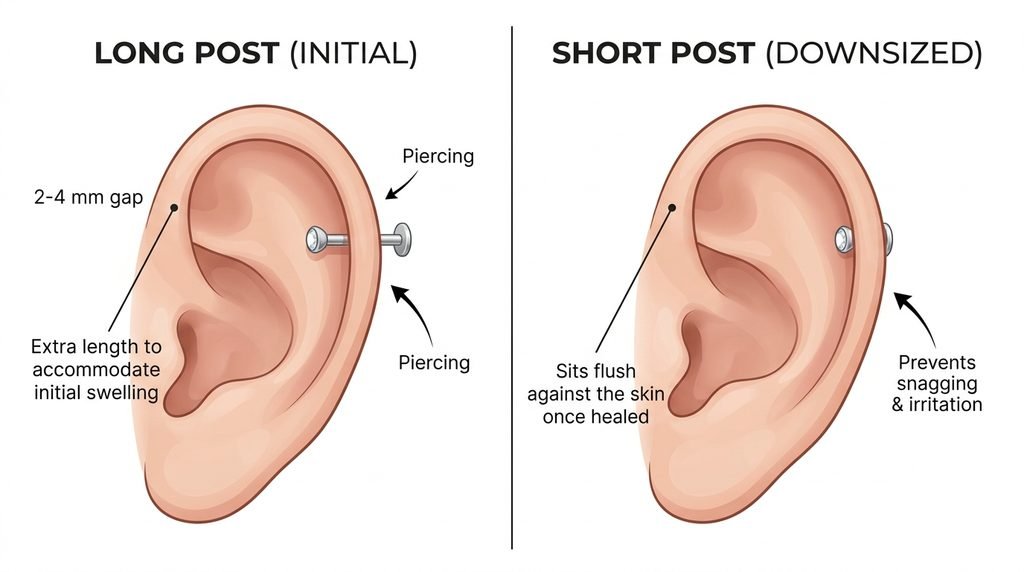
To allow for swelling, most helix piercings begin with a longer post. The extra length could get caught on pillows, caps, and hair until the swelling subsides, and the increased movement may irritate the piercing. With a downsizing, the lengthy post is swapped out with a shorter one that is closer to the ear. It is the one adjustment that is typically advised prior to the piercing healing completely.
When to Downsize Your Helix Piercing
Many professional piercers suggest a downsize visit at around 4 to 12 weeks, depending on how your ear is responding. Swelling should be mostly gone, and the post should feel noticeably too long. A shorter post reduces movement, which supports healing and lowers the chance of bumps.
Why You Should Not Downsize at Home
Your piercer can use sterile instruments to handle the jewelry, verify the proper post length, and check the placement. Attempting to swap early on your own may damage the channel or introduce bacteria. The majority of studios provide downsizing for a little fee, and some give the initial downsize together with the original piercing.
Signs Your Helix Piercing Is Ready for a Change
Instead of counting days, look for these signs that your piercing has healed enough for new jewelry.
Signs Your Helix Piercing Is Fully Healed
- No pain or tenderness when touched
- No redness or swelling around the piercing
- No discharge, crusting, or bleeding
- The jewelry moves slightly without discomfort
- No soreness when you sleep near the area, within reason
- At least 6 months have passed since the piercing
Signs It Is Too Soon to Change Your Jewelry
If you notice any of the following, wait longer and consider checking in with your piercer:
- Tenderness or throbbing, even occasionally
- Clear or yellow fluid, or crust forming after cleaning
- Redness or warmth around the piercing
- A bump forming next to the hole
- Pain when you try to turn the jewelry
Note that a piercing can look healed on the outside while the inside is still healing. When in doubt, a quick check at your piercer is worth it.
Step-by-Step Guide to Changing Helix Jewelry
Once your piercing is fully healed, you can change the jewelry yourself, or visit your piercer if you feel unsure. Taking your time and keeping everything clean makes a big difference.
1. Wash your hands thoroughly with soap and warm water.
2. Clean the piercing and the new jewelry with a sterile saline solution.
3. Remove the existing jewelry gently, unscrewing or opening it carefully.
4. Insert the new jewelry slowly, without forcing it.
5. Secure the jewelry and clean the area again with saline.
6. Monitor the piercing for the next few days for any irritation.
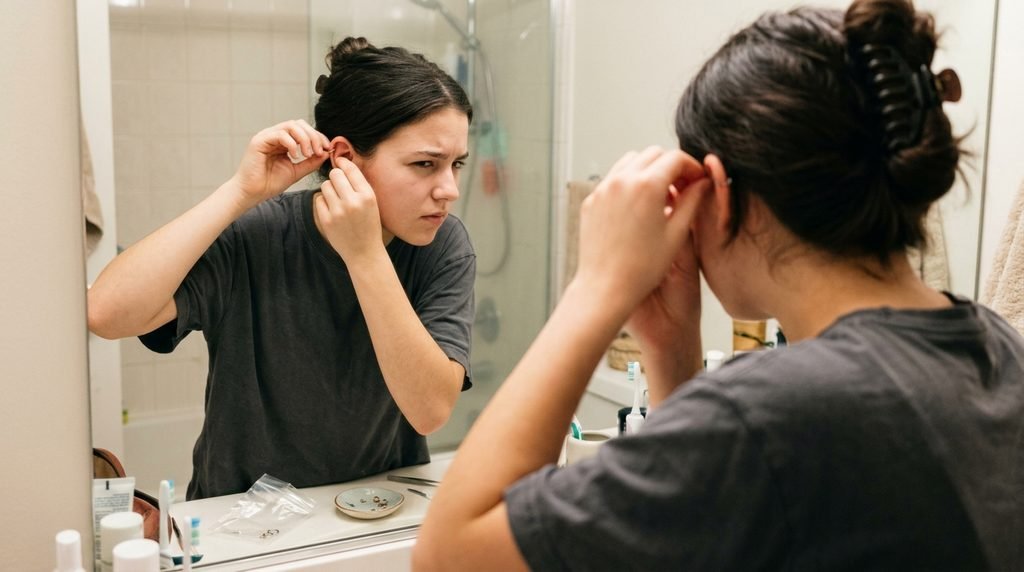
If the jewelry will not come out easily, or you feel sharp pain, stop and see a professional piercer. Forcing it can damage the tissue. Many people also find it easier to do the first change in good lighting with a mirror, or with a friend’s help.
Best Materials for Helix Jewelry
- Implant-grade titanium: lightweight and highly biocompatible, a top choice for sensitive skin.
- Solid 14k or 18k gold: durable and generally well tolerated if nickel-free.
- Niobium: a hypoallergenic option for people sensitive to metals.
Avoid: plated jewelry, costume metals, and anything that contains nickel
Conclusion
So, when can you change your helix piercing? For most people, the safe answer is after 6 to 12 months, once the piercing is free of pain, redness, swelling, and discharge. The only common exception is a downsize swap, which is best done by a professional piercer at around 4 to 12 weeks. Patience, quality jewelry, and a gentle aftercare routine will protect your piercing and help it last for years.
FAQs
Can I change my helix piercing after 3 months?
It is usually too early. Even if the outside looks healed, the inside of the piercing is still forming. Waiting until at least 6 months is safer, and a piercer can tell you whether a downsize is appropriate before that point.
How do I know my helix piercing is fully healed?
A healed helix has no pain, redness, swelling, or discharge, and the jewelry moves comfortably. If you are unsure, a professional piercer can check it quickly.
Can I change my helix piercing myself?
Yes, once it is fully healed and you have clean hands and sterile jewelry. For the first downsize, or if you are nervous, visit a professional piercer.
What happens if I change my helix piercing too early?
You may experience swelling, pain, irritation bumps, or even infection, and healing may take longer. If this happens, put your original jewelry back and contact your piercer.
What is the best jewelry to put in a new helix piercing?
Implant-grade titanium flat-back studs are a popular choice because they are lightweight, low-profile, and gentle on healing skin.
When should I downsize my helix piercing?
Most piercers recommend a downsize at around 4 to 12 weeks, once the initial swelling has gone down. A shorter post reduces movement and snagging while the piercing finishes healing.
Can I switch to a hoop in my helix piercing?
It is best to wait until the piercing is fully healed, usually 6 to 12 months. Hoops move more than studs and can irritate a healing piercing.
How long can I leave my helix piercing out?
Cartilage piercings can start to close within hours, especially when they are newer, so avoid leaving the hole empty. If you cannot get the jewelry back in, see your piercer