
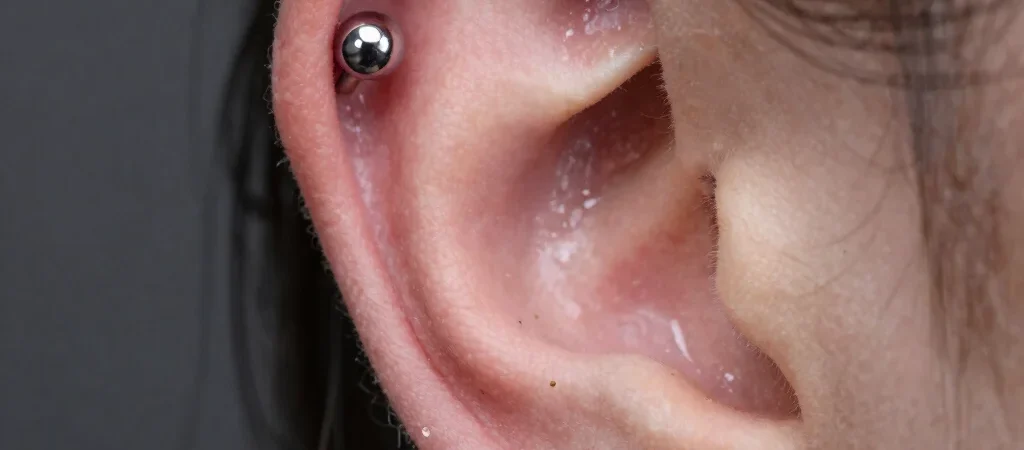
Cartilage tissue is notoriously slow to heal due to its limited blood supply. When you step out of the studio with a fresh helix piercing, you are initiating a six to twelve-month commitment that demands patient protocol rather than quick fixes. Understanding what normal inflammation looks like at each phase keeps you from panicking during localized swelling or downsizing your post too early.
Months One to Three: Acute Inflammation and Saline Flushes
The initial ninety days focus strictly on managing localized swelling and maintaining sterile conditions. Expect moderate redness, localized heat, and clear fluid crusting around the entry and exit holes. Clean the area twice daily using an isotonic sterile saline flush, avoiding cotton swabs or harsh antiseptics that tear fragile new skin cells.
During this first phase, keeping an implant-grade titanium flat-back labret with extra post length is vital. The longer post accommodates mandatory swelling, but you must strictly avoid sleeping on the pierced side or catching the bar on clothing and hair.
Months Three to Six: Downsizing and Internal Tissue Consolidation
Once initial swelling recedes around the two-month mark, return to your professional piercer to downsize the post length. Leaving a long post in place past this window leads to angle shifting, leverage irritation, and persistent fluid bumps along the cartilage ridge.
Although the exterior piercing hole may look completely quiet by month four, the internal cartilage channel remains delicate. Continue daily saline rinses and refrain from twisting, rotating, or swapping the initial decorative top.
Months Six to Twelve: Full Maturation and Jewelry Upgrades
True fistula maturation occurs deep within the cartilage plate between six and twelve months. Only when the channel shows zero tenderness, redness, or discharge under light pressure can you safely transition to custom hoops, intricate seam rings, or heavier gold pieces.